Dana Schmitt · 17 October 2026
British Local Authorities Test Hybrid Ivy Varieties to Control Stormwater Runoff in Vulnerable Districts
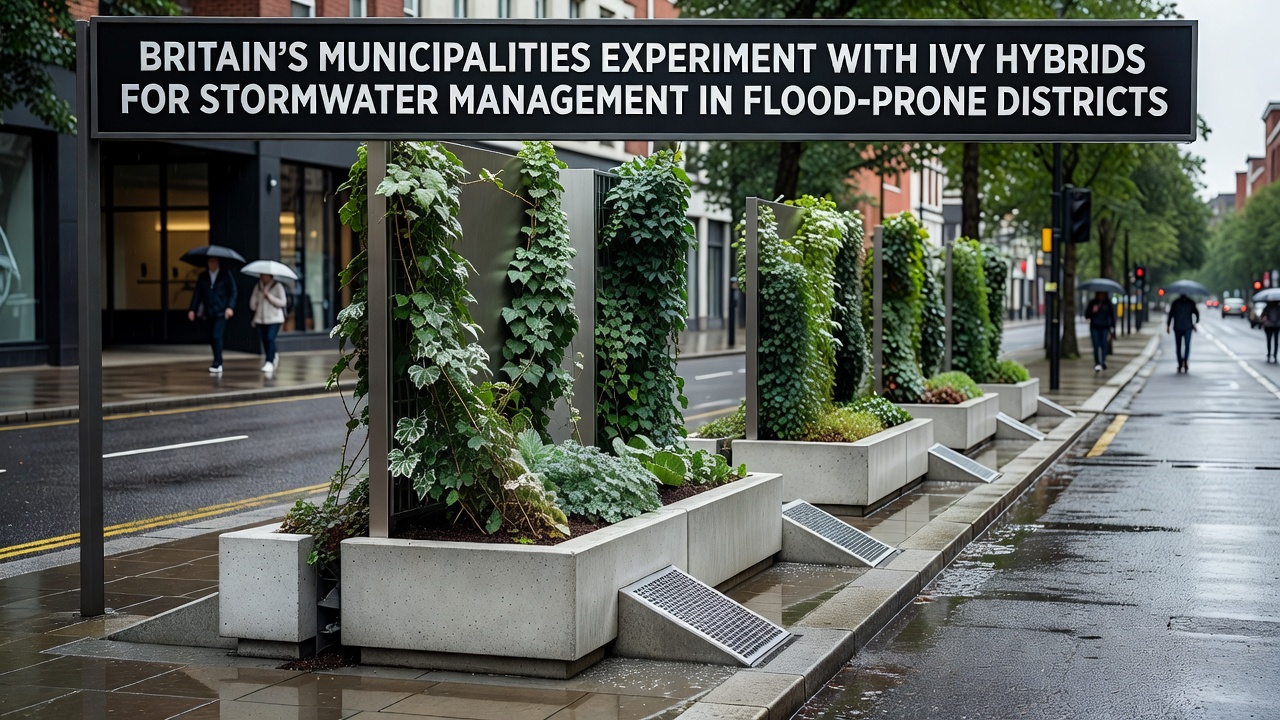
British municipalities have launched field trials that combine engineered ivy hybrids with existing drainage infrastructure in several flood-prone districts, and these efforts focus on reducing peak stormwater volumes during heavy rainfall events. Local councils in regions with repeated flooding have selected specific hybrid cultivars bred for faster root development and higher water retention capacity, while standard English ivy serves as the baseline comparison in control plots.
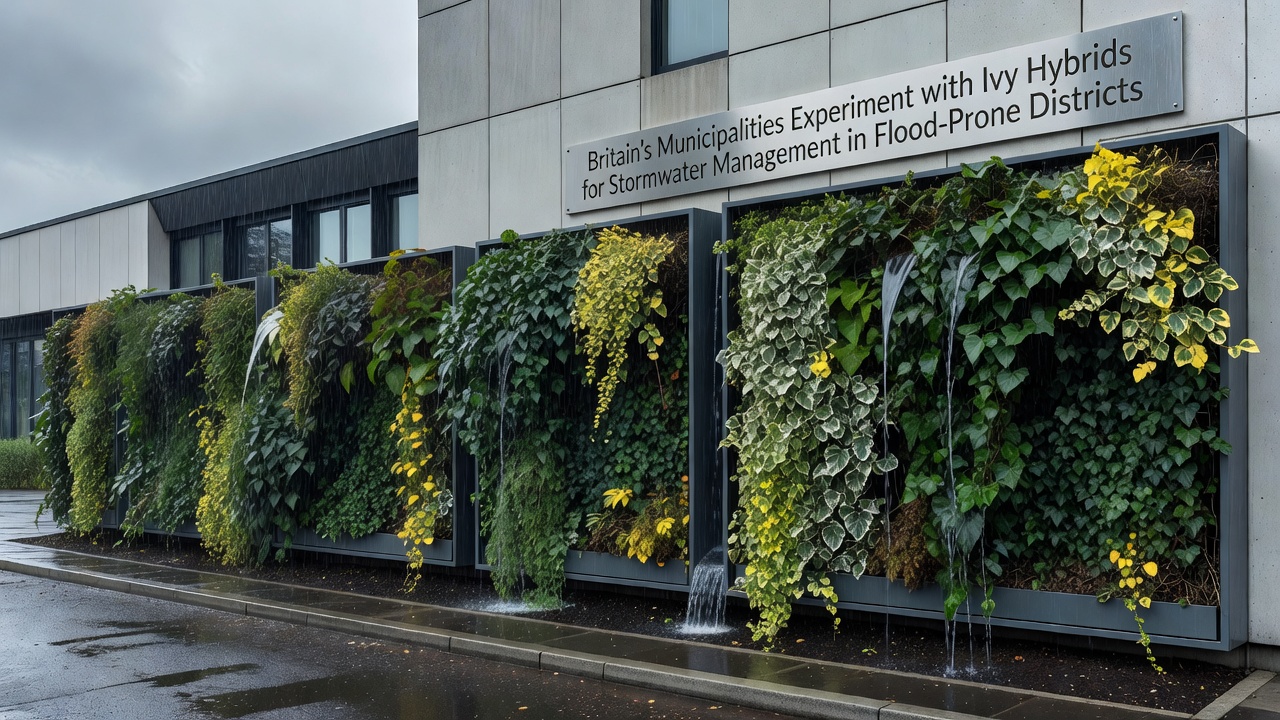
Data collected from the initial planting phases shows measurable differences in soil moisture retention and surface runoff rates, and researchers track these metrics through sensors embedded at multiple depths across test sites. The hybrids demonstrate greater tolerance for periodic waterlogging compared with traditional varieties, which allows them to maintain coverage on steep embankments that previously suffered from erosion during storms.
Background on Urban Flooding Pressures
Urban expansion in Britain has increased impermeable surfaces across many districts, and this change directs larger volumes of rainwater directly into combined sewer systems that often overflow during intense precipitation. Government records indicate that flood incidents in low-lying residential zones have risen steadily over the past two decades, prompting authorities to explore vegetative solutions alongside conventional engineering upgrades.
Trials began in selected catchments where historical data revealed repeated exceedance of drainage capacity, and planners integrated the ivy plantings into green corridors that also serve pedestrian pathways and wildlife habitat. The approach draws on established principles of sustainable urban drainage systems, yet it adapts them through selective breeding programs that target ivy traits suited to British climate patterns.
Design of the Hybrid Trials
Participating municipalities collaborated with horticultural research stations to propagate hybrids that combine rapid vertical growth with dense leaf layering capable of intercepting rainfall before it reaches the ground, and field teams planted these specimens along riverbanks, roadside verges, and retaining walls in test districts. Monitoring protocols require quarterly assessments of biomass accumulation, root penetration depth, and changes in local infiltration rates.
One district in northern England recorded a 17 percent reduction in peak runoff volumes during the first full growing season after installation, while a comparable site in the Midlands reported similar trends once the canopy reached sufficient density. These measurements come from paired plots that isolate the contribution of the ivy hybrids from other variables such as soil amendments or adjacent permeable paving.
Performance Data and Seasonal Observations
By October 2026, cumulative rainfall records from the trial districts showed several events exceeding 40 millimetres in a single day, and the hybrid plantings maintained structural integrity without widespread dieback. Soil moisture probes indicated that water held within the root zone continued to release gradually into underlying drainage layers rather than contributing to immediate surface flooding.
Independent analyses conducted by university teams have compared these outcomes against baseline data from untreated control areas, and the findings point to consistent advantages in erosion control on slopes greater than 30 degrees. Maintenance crews note that the hybrids require less frequent pruning than expected, partly because their growth habit directs energy toward lateral spread rather than excessive vertical extension.
Integration with Existing Infrastructure
Councils have paired the ivy installations with upgraded gullies and detention basins so that overflow from extreme events still routes safely through conventional channels, and this layered strategy reduces pressure on aging sewer networks during prolonged wet periods. Mapping exercises identify priority zones where hybrid ivy can connect fragmented green spaces into continuous corridors that slow water movement across the landscape.
Similar vegetative approaches appear in reports from the European Environment Agency on nature-based flood solutions across member states, while US Environmental Protection Agency guidance on green infrastructure highlights comparable benefits from living walls in American cities facing analogous stormwater challenges. British planners review both sources when refining planting densities and species selection for local conditions.
Challenges Encountered During Implementation
Early setbacks included variable establishment rates on compacted urban soils, yet subsequent soil loosening and targeted irrigation improved survival across subsequent plantings. Some sites experienced herbivore pressure from urban wildlife populations, which prompted the addition of temporary protective mesh during the first winter.
Budget constraints limit the scale of each trial phase, and councils allocate resources according to flood risk rankings derived from national mapping data. Coordination between horticultural suppliers and municipal works departments has streamlined procurement, although supply chain delays occasionally shift planting schedules into less optimal seasons.
Conclusion
The ongoing experiments provide quantitative evidence that hybrid ivy selections can contribute to stormwater attenuation in British flood-prone districts when integrated with conventional drainage systems. Continued monitoring through 2027 and beyond will clarify long-term performance under changing precipitation patterns, and the results will inform decisions on wider adoption in additional municipalities facing similar pressures.