
Paul Russell · 31 October 2026
Global Plant Exhibition Discoveries Prompt Shifts in British Ivy Cultivation Methods
International plant exhibitions have long served as hubs for sharing data on species performance, disease resistance, and environmental adaptability, and observers note that these events increasingly shape practices among UK ivy growers who monitor presentations from regions facing similar temperate challenges. Data from recent shows indicate that findings on hybrid vigor and pest tolerance presented at venues in Asia and North America have led domestic cultivators to refine propagation schedules and substrate choices for Hedera species commonly used in British landscapes.
Key Findings From Recent Exhibitions
Researchers presenting at the 2025 Singapore International Flora Congress highlighted how certain Asian ivy cultivars maintain leaf retention under elevated humidity levels, and those results reached UK horticultural networks through published proceedings that growers accessed via industry channels. British nurseries responded by adjusting misting protocols during winter cuttings, which reduced rot incidence according to records kept by several Midlands-based operations. Meanwhile, data shared at the Toronto Botanic Trials in early 2026 showed that North American selections exhibited stronger tolerance to urban pollutants, prompting some English propagation teams to trial similar genetic lines in controlled greenhouse settings.
Exhibition reports also emphasized soil microbiome interactions, with studies from Australian participants revealing that certain fungal associations improve ivy root establishment in compacted urban soils. UK growers have incorporated these insights into their potting mixes, substituting traditional peat-based blends with formulations that include biochar components sourced from domestic suppliers. This adjustment aligns with broader efforts to meet evolving substrate regulations set by Defra guidelines on sustainable growing media.
Domestic Adjustments in Propagation and Site Selection
UK ivy producers have modified their seasonal timelines based on exhibition data showing that earlier rooting under LED-supplemented lighting improves establishment rates when plants face variable spring conditions. Several large-scale operations in the southeast now initiate cuttings in September rather than October, allowing root systems to develop before the first frost. Observers tracking these changes point to reduced transplant shock documented in field trials conducted across Kent and Sussex nurseries.
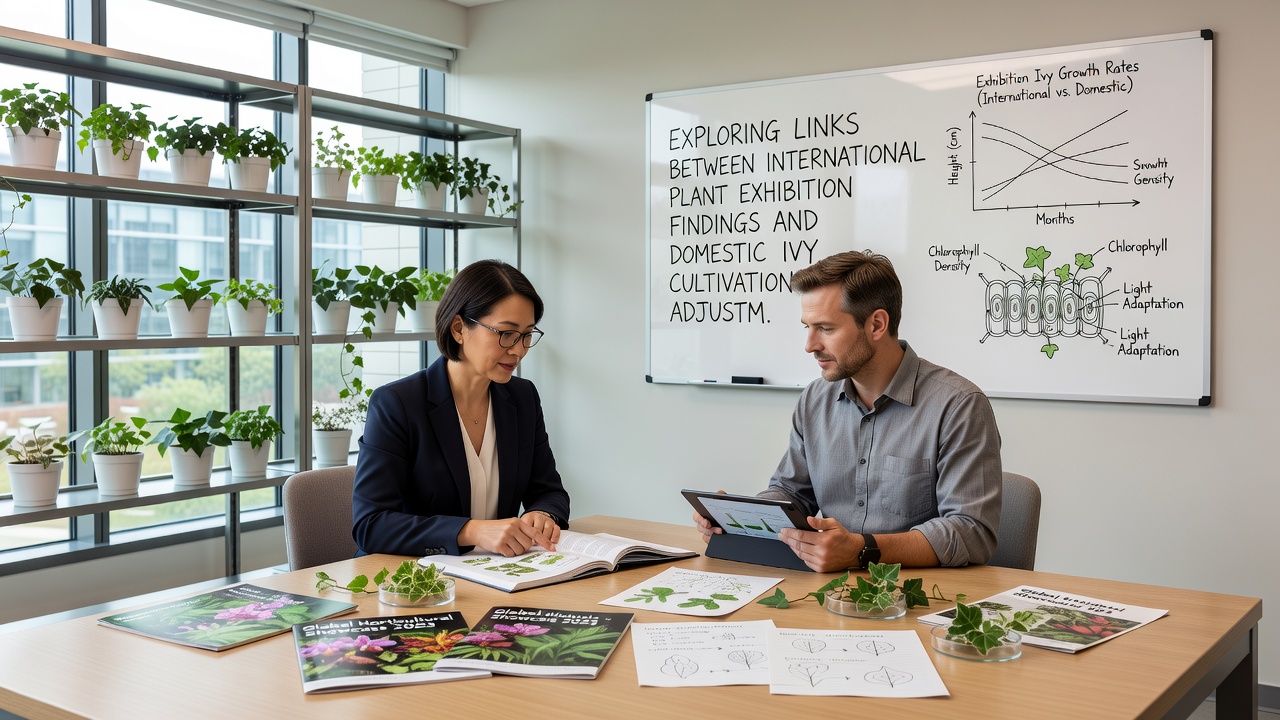
Site selection strategies have also evolved following presentations on microclimate effects at European horticultural gatherings. Growers in northern England now prioritize south-facing walls with better wind protection after data indicated that exposure increases winter desiccation in certain Hedera helix varieties. These modifications coincide with ongoing monitoring programs run by local authorities that record plant performance in public green spaces, creating feedback loops that further refine cultivation choices.
Integration With Broader Environmental Data
International exhibitions frequently include climate modeling sessions, and findings presented at the 2026 Melbourne Plant Science Forum projected extended growing seasons in northern latitudes. UK cultivators have used this information to extend the window for outdoor planting into late autumn, while introducing protective fleece covers only when temperatures drop below thresholds identified in those models. Such practices help maintain consistent supply chains for landscaping projects scheduled throughout the year.
Collaboration between UK institutions and overseas research bodies has accelerated knowledge transfer, with joint papers on pathogen resistance circulating among professional networks. The upcoming Global Flora Expo scheduled for October 2026 in Hamburg is expected to feature updated datasets on ivy performance under simulated heat stress, and British participants plan to apply those results directly to their breeding programs aimed at developing more resilient domestic stock.
Conclusion
Links between international exhibition findings and UK ivy cultivation continue to strengthen through shared research outputs and practical trials. Growers incorporate data on cultivar performance, propagation timing, and environmental resilience into their operations, resulting in measurable improvements in plant health and establishment rates across various British regions. These connections demonstrate how global information exchange supports targeted adjustments in domestic horticulture without requiring wholesale reinvention of established methods.