Sofia Schröder · 19 September 2026
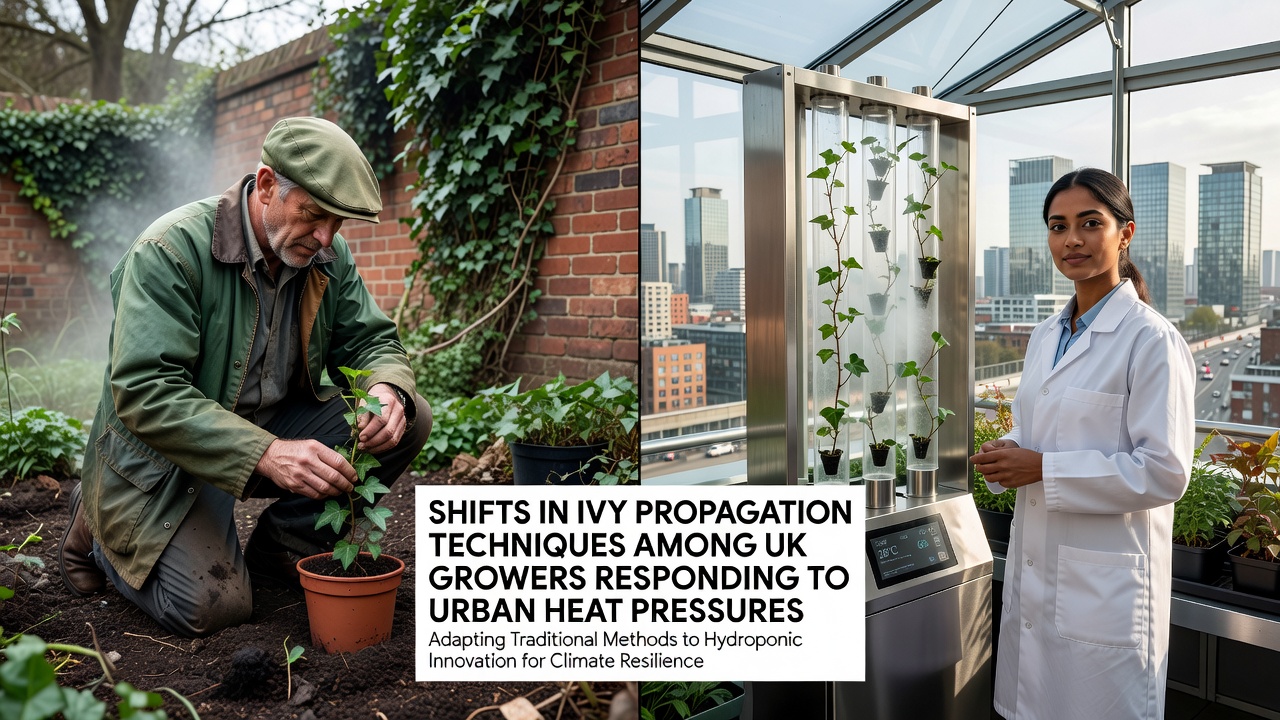
UK Ivy Growers Shift Propagation Strategies in Response to Urban Heat Challenges
Urban heat islands across British cities have prompted growers to revise traditional ivy propagation methods, with data from monitoring stations indicating average summer temperature increases of 1.5 to 2.8 degrees Celsius in built-up areas over the past decade. Researchers at several horticultural institutions have documented these changes through field trials that compare older techniques with newer approaches designed to maintain cutting viability under elevated stress conditions. Growers in London, Manchester and Birmingham report that conventional open-air rooting beds now require additional protective measures, while timing adjustments help avoid peak heat periods that previously caused higher failure rates in Hedera helix varieties.
Traditional Propagation Practices Under Review
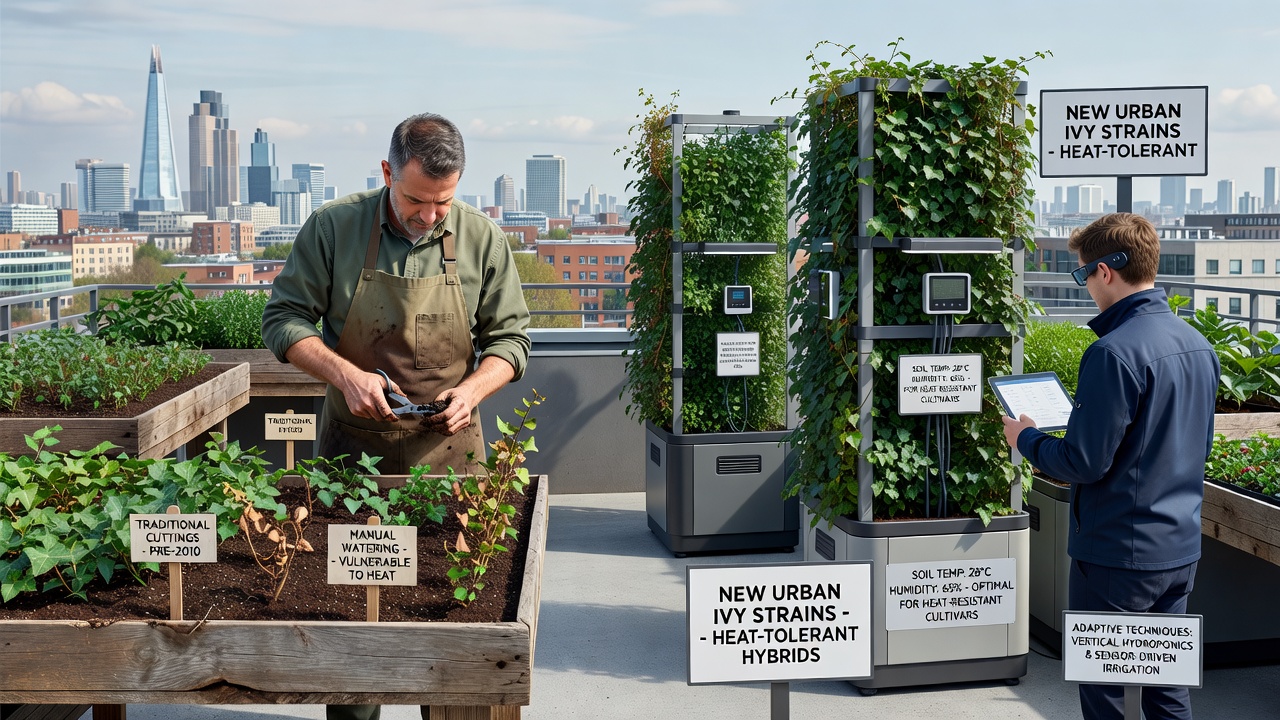
Historically UK nurseries relied on semi-ripe cuttings taken in late summer and inserted directly into well-drained compost mixes without supplementary shading, yet rising ambient temperatures have altered success rates according to records kept by commercial operations. Many sites have introduced temporary shade structures and misting systems that maintain humidity levels above 80 percent during the critical first three weeks after insertion. These modifications emerged gradually after 2022 when multiple growers noted increased incidence of leaf scorch and root rot linked to daytime temperatures exceeding 28 degrees Celsius on a more frequent basis.
Adaptations in Timing and Substrate Selection
Observers note that propagation calendars have shifted forward by two to three weeks in several regions so that cuttings root before the most intense heat arrives, while others extend the season into early autumn using controlled environments. Substrate formulations now incorporate higher proportions of perlite and coir to improve aeration and water retention, with some operations testing biochar additives that help stabilize moisture around developing roots. Data collected from 45 commercial sites shows these substrate changes correlate with a 12 to 18 percent improvement in rooting percentages during warmer months compared with standard peat-based mixes used previously.
Case Examples from Major Growing Regions
One nursery near Bristol adjusted its indoor propagation benches with reflective materials and automated ventilation after recording substrate temperatures above 30 degrees Celsius in 2024, resulting in consistent production levels through subsequent seasons. In Edinburgh growers incorporated evaporative cooling pads into polytunnels following guidance issued by the Scottish Agricultural College, and they now monitor root zone temperatures daily during July and August. Reports compiled for the September 2026 horticulture symposium in York highlighted similar adjustments across northern and southern counties, with emphasis on integrating weather station data into daily propagation decisions.
Role of Research Institutions and Monitoring Networks
Studies conducted by the University of Reading have tracked physiological responses in ivy cuttings exposed to simulated urban heat profiles, revealing that varieties with higher stomatal density experience faster water loss when ambient humidity drops below 60 percent. These findings prompted several commercial teams to install humidity sensors linked to misting timers, reducing manual intervention while maintaining stable microclimates. Meanwhile the European Environment Agency has published comparative data showing parallel trends in other northern European cities, where growers adopted comparable shading and substrate strategies with measurable reductions in plant losses during heat events.
Industry groups such as the Horticultural Trades Association have begun collating anonymized production statistics that demonstrate the cumulative effect of these technique shifts across the UK sector. Participation in these data-sharing initiatives remains voluntary yet continues to expand as more operations seek benchmarks for their own performance under changing climatic conditions.
Conclusion
UK growers continue to refine ivy propagation methods in response to documented urban temperature increases, incorporating adjustments in timing, substrate composition and environmental controls that reflect both local observations and wider research outputs. Ongoing monitoring through 2026 and beyond will determine which combinations of techniques deliver the most reliable results across different city environments and ivy cultivars.